
A widespread reason given for using Body Worn Video is the desire to capture footage which can be used to verify what happened in a particular situation. This could be to the benefit of both the wearer, such as a police officer or security professional, and the individual/s being recorded. The key point about Body Worn Video is that it captures personal interaction. In this respect it fulfils a different function to CCTV, which provides video coverage of zoned areas, giving an overview that can include sight of spaces no individual can see. A body worn camera records sound and vision from the wearer’s perspective.
The very presence of a Body Worn Video device could also be a deterrent. For example, in healthcare settings, the Royal College of Nursing published a position statement in May last year on the use of bodycams. Part of this statement says “The use of body worn cameras has been steadily increasing in health and care settings across the UK as a measure to prevent incidents of violence and aggression occurring.”
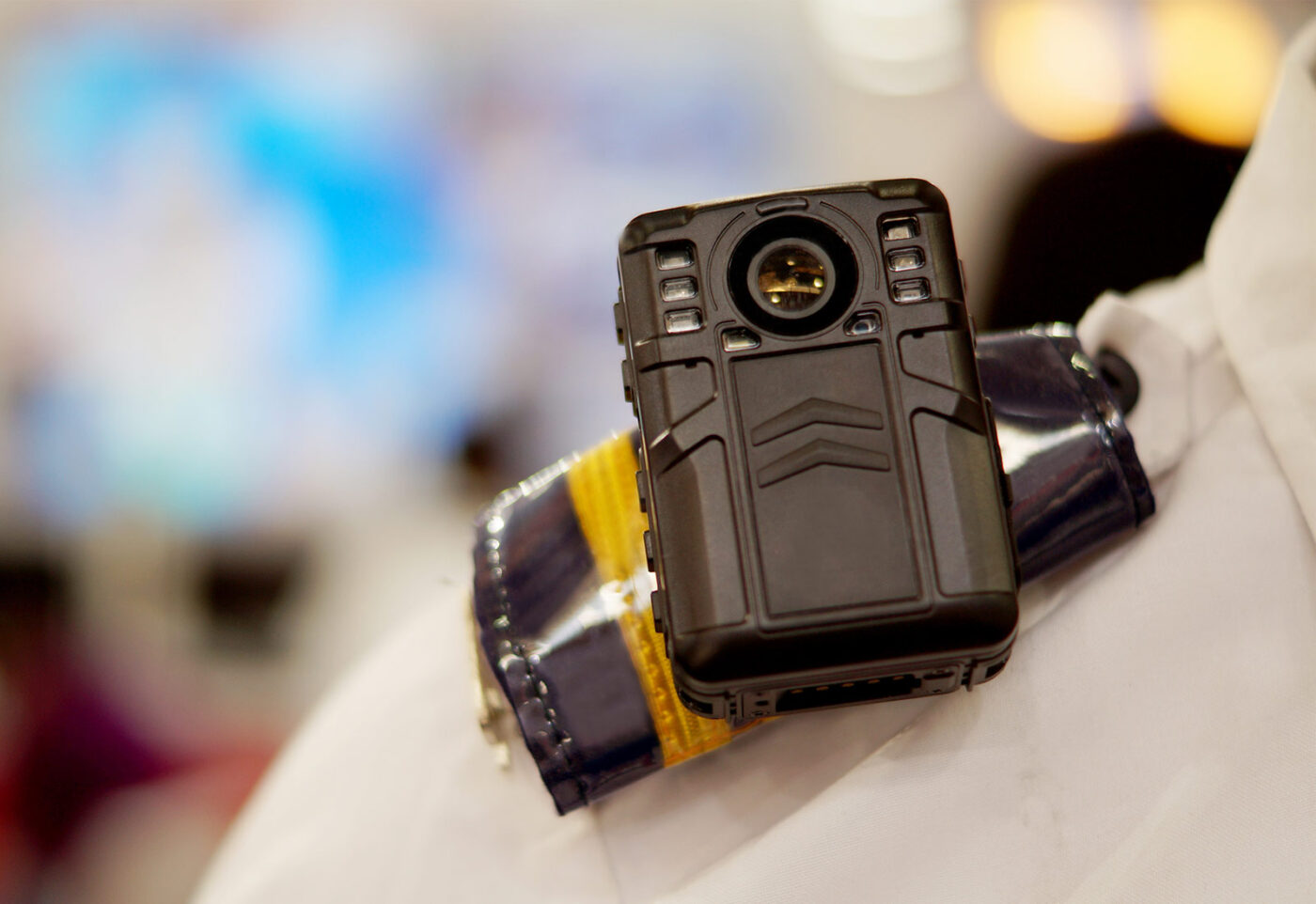
Use of Body Worn Video devices is growing
Some see the increasing use of Body Worn Video as a consequence of a rise in challenging behaviour and / or theft in some settings. To take the example of retail, in September 2023 the British Retail Consortium sent a letter signed by 91 retail leaders to the Home Secretary asking for a new statutory offence of assaulting, threatening, or abusing a retail worker.
Meanwhile, at the time of writing, some supermarkets are rolling out bodycams to staff, although others are circumspect.
Outside the leading supermarkets, individual shops or small chains may consider buying bodycams just as many have their own CCTV setup. The same may apply to other organisations with public facing roles. They may see the use of bodycams as a form of wearable insurance policy, their presence performing a preventative function in some situations, and evidence where the prevention role fails.
Good practice guidance on technical matters
While there is no specific legislation covering bodycams, there is government guidance on using surveillance cameras, and the Information Commissioner provides some specific guidance on Body Worn Video devices. Any firm or individual considering using a bodycam has a number of points to consider relating to good practice and the selection of the right technology.
While Cardwave is not in a position to consider the legal position on the use of Body Worn Video, we are able to comment on the technical aspects, of which there are several.
Cardwave’s view
Bodycams are readily available from online retailers, from prices starting at under £50, rising to several hundred pounds. Features can include smartphone apps, motion sensitivity, night vision, video and still capture, built in screens, water resistance, Bluetooth and W-Fi connections, file encryption and cloud upload via the mobile network.
Body Worn Video devices at the lower end of the price spectrum tend to rely on saving footage to microSD cards, and rather than uploading files automatically to local or cloud based storage, such uploading is a manual process. In these cases, the microSD card is absolutely fundamental to the success or failure of the device.
The microSD card can also behave like a vault, protecting the integrity of the data written to the card and restricting access to authorised users. However it can be a key point of failure, both through misunderstanding of the technical capabilities of cards and because of misuse.
In terms of misuse, while there are technical solutions available that can prevent access to recordings, such as password protection, most end users are not aware of these, with the result that video recorded to microSD cards can be accessed, read, copied and even tampered with by the user or by any third party. A BBC investigation found instances of camera footage being lost, deleted, not marked as evidence, shared on social media, or used covertly. Such reports undermine trust in bodycams – though these instances were not the fault of poor technology, but the result of a failure to protect the data. Indeed even a camera’s ability to timestamp video footage to help its admissibility in court is something that may not be understood by some users.
The integrity of video captured by a Body Worn Camera can only be trusted if it is possible to prove a video is genuine and has not been tampered with. There are products on the market which can provide this proof, but again they are not widely known. They are specialist products, rather than regular microSD cards, and not readily available from standard retailers. Cardwave’s industry knowledge and contacts enables us to source such cards for our customers.
In addition to these technical points, it is also crucially important to understand that microSD cards are available with a very wide range of specifications. Less expensive cards, primarily aimed at the consumer market, have less robust specifications than those aimed at professional users. Some of the key aspects that should be born in mind in relation to Body Worn Video devices are:
In addition to these factors it is worth noting that fake microSD cards continue to be widespread. It is not always easy to spot the difference between fake and genuine cards. Generalist retailers which support third party sellers are not immune to being a conduit for sellers of fake cards. Our best advice for those who are buying their own microSD cards is to buy from a reputable seller – –including brands which sell direct to the public.
Best advice: don’t compromise on the card
In the end, then, it is crucial that anyone considering investing in Body Worn Video pays as much attention to the microSD card they use as they do to the body worn device itself. Select the wrong card, and your camera could underperform. Anyone looking at volume purchasing who wants the best quality card for the job, including support for anti-tamper features, would be advised to work with a trusted supplier such as Cardwave.


