
MARKET REPORT
SPRING 2024

The supply chain for flash memory is in a period of rebalancing. The oversupply we noted in our Autumn 2023 Market Report is over, and production has slowed. This means it is no longer a buyer’s market, and there is more competition for product, resulting in higher prices.
This is a sector which never stands still, and there is plenty of innovation happening with the leading players all expected to release new flash architectures this year, while they continue to also produce popular, OEM sustaining mass inventory.
Manufacturers are rectifying oversupply issues
In our Autumn 2023 Market Report, we noted that there was visible oversupply of product, leading to a buyers’ market and manufacturers having to lower unit cost to shift inventory. This situation created a competitive market in which manufacturers’ profitability was challenged. We expected a rebalancing to take place.
This is precisely what has happened. Manufacturers have reduced output, and unit prices are now rising as the situation moves into one where supply and demand are more balanced. We now anticipate that prices will continue to rise, and then, hopefully, plateau. As demand grows, we expect to see prices remain high for some time.
We expect prices to stabilise rather than become volatile with extremes of high and low pricing and supply, while the market itself steadily grows. Mordor Intelligence (NAND Flash Market Share & Size – Industry Manufacturers (mordorintelligence.com) says the market is worth $52.8bn and will grow to $68.8bn within 5 years.
As prices rise, it will be important to keep forecasting and planning activity in good order. Understanding how and where prices are changing, and matching this to forecast demand needs, will enable purchases to be made at the price “sweet spot”. This is where Cardwave’s long-term experience and global supply chain contacts are valuable to our customers.

Above: We expect to see a rebalancing of supply, and prices to rise and then, hopefully, plateau.
Demand and product development
The flash memory market never stands still. Device makers consistently demand more capable product, both in the embedded and removable space, and manufacturers are always working on product improvements to meet both existing and future demand. Capacity and speed are the key elements of new products announced by market leaders Samsung, Kioxia / Western Digital and SK Hynix, and these products are likely to prove popular in the market.
As the leading supplier of NAND, Samsung has announced it is on track to produce its 9th Generation V-NAND which uses 300 layers. SK Hynix has also announced its own 8th Generation NAND device with 300 layers.
Meanwhile the Kioxia / Western Digital combination has announced plans for its 8th Gen 3D NAND which supports TLC and QLC configurations to maximise storage density. While it uses 128 layers, speeds will be faster and density is rising, so that fewer chips will be needed to build products. This is positive as demand for data storage products continues to grow.

Above: Prices of flash memory products are expected to remain high throughout Q2 and Q3’.
Demand and legacy product
While new and leading edge products are entirely appropriate for some users of flash memory, many of those who use flash either for existing or for new product development, require a more standardised product.
For example Cardwave has significant volume business provisioning and distributing removable flash storage for customers in a very wide range of market sectors. These customers may require standard or industrial grade embedded or removable flash memory, or products with sophistications such as per-user authorisation codes to ensure secure distribution. It is these, rather than the leading edge innovative products, which are the bread and butter of manufacturers, and they must keep reliability standards high and minimise failure rates to ensure profitability.

Above: While new high end products will come on stream, the volume market is in more mainstream products.
Indeed, many OEMs prefer to work with product whose capabilities and performance is tried and tested, rather than the latest innovations. Newer products may offer performance advantages, but these may not be needed by customers, who prefer reliability and guaranteed volume over being at the leading edge.
Manufacturers know this, and must continue to produce what they might consider legacy technologies, but which end users consider necessary technologies, in order to maintain sales and profitability. It would be anticompetitive and irresponsible for the whole sector for manufacturers to stop production.
In these cases, our job is to source the best flash memory for the job for our customers, while providing advice on which is the best product for their needs, ensuring we have enough inventory to meet demand, and performing our provisioning, packaging and distribution role in an exemplary fashion. For those customers looking to change to different flash memory products, our role is to advise, support and help smooth out bumps in the process. We also have to understand how each manufacturer approaches product lifecycle. Some like to move to newer, faster products more quickly than others. Using our expert knowledge of the sector we can ensure our customers have a reliable source of the products they need.
Market consolidation
The key development among the leading brands in the market over the course of this year is likely to be the demerger of SanDisk and Western Digital. While the intention to demerge has been announced, it is not expected to be reality until at least the second half of 2024. Nonetheless, there is much speculation about why this is happening and what the effect will be.
Western Digital bought SanDisk in 2016 at a price approaching $19bn. Why divest now? One school of thought is that when Western Digital bought SanDisk they thought solid-state storage would be the future, with mechanical hard drives becoming a thing of the past. But the hard disk drive market has turned out to be much stronger than anticipated. One example of this is that data centres continue to rely on mechanical storage rather than solid state, keeping the mechanical storage market buoyant.
Analyst speculation is taking several paths. These include that the demerger may mean SanDisk becomes attractive to a potential buyer, or it may go back to functioning standalone as it was before acquisition. Meanwhile analyst speculation about a Western Digital / Kioxia merger continues, and may become more concrete as 2024 progresses.
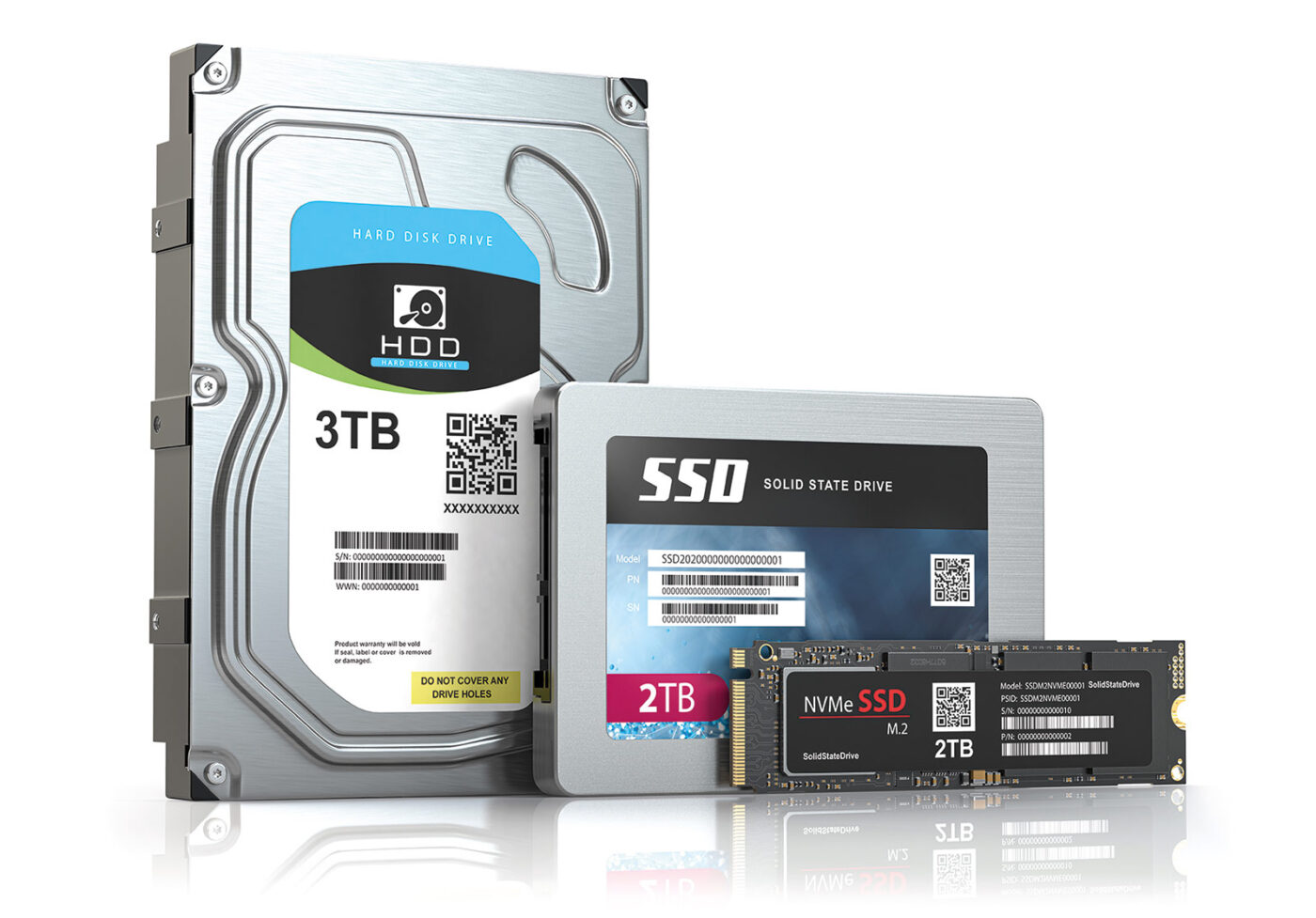
Above: The announced demerger of SanDisk and Western Digital may become a reality in the second half of the year.
What Cardwave sees today
Outlook
About Cardwave
Cardwave provides consultancy services to help device makers select memory for their products. We help our customers find the right memory, in the right quantity, at the right price. We work with leading suppliers across the globe, have excellent networking links, and strong supply chain routes. We provision, package and ship product globally.


